Reliable Conduit Connections for Continuous Electrical Runs
Loose conduit joints can delay electrical installations and create safety concerns. EMT couplings provide a strong, code-compliant connection that keeps conduit systems secure, aligned, and ready for dependable wiring.
Build Stronger and More Reliable Electrical Raceway Systems
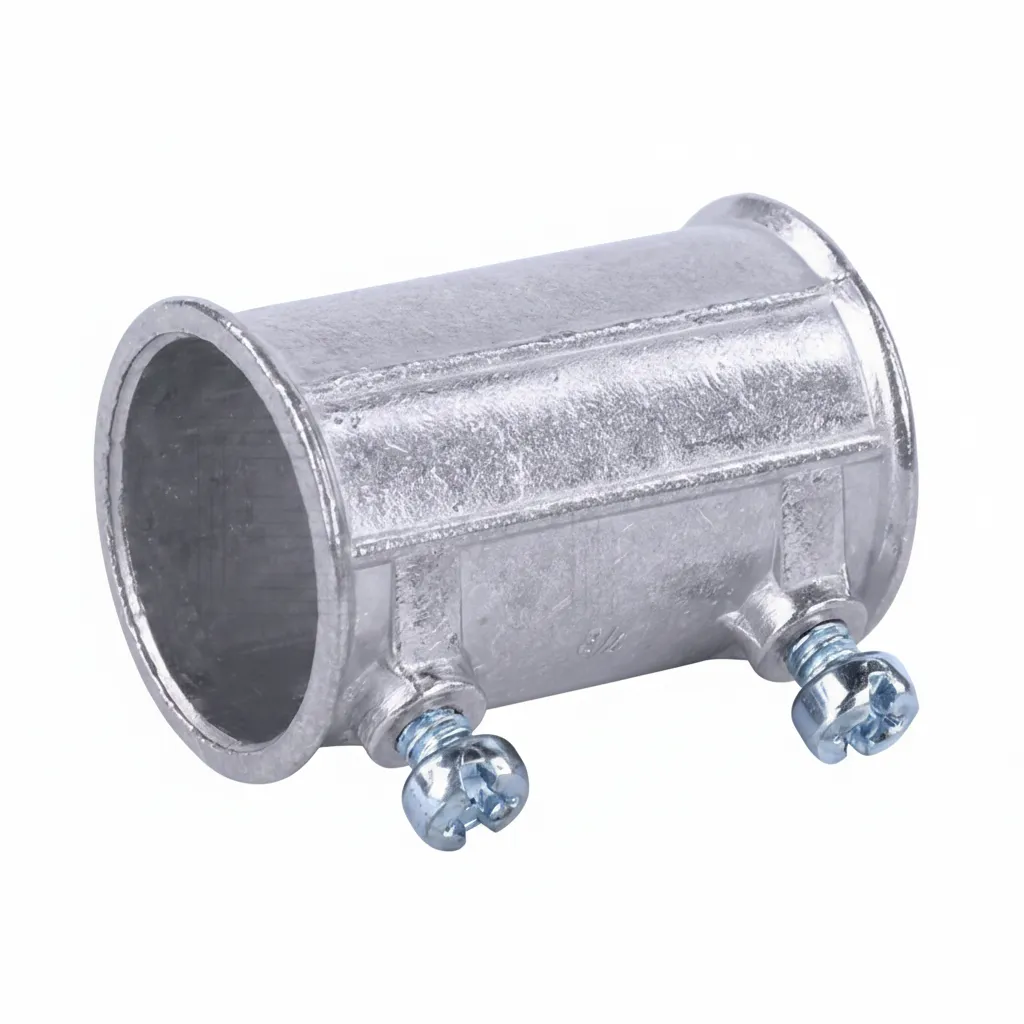
Electrical projects often stall when conduit runs cannot be joined securely or when installers struggle with inconsistent fittings. A reliable EMT coupling solves this problem by creating a stable connection between conduit sections. Durable metal construction secures conduit joints that withstand demanding installation environments, helping electrical systems stay protected from mechanical stress. Corrosion-resistant galvanized or coated surfaces guard the fitting against rust and environmental wear, which allows conduit systems to maintain long-term performance even in humid or exposed locations.
Set-screw or compression connection options allow electricians to install conduits quickly while forming a tight mechanical bond that reduces the risk of loose connections or costly rework. A smooth internal raceway also supports easier wire pulling, which protects insulation and shortens installation time. UL and ANSI compliant construction helps installers meet electrical safety standards and maintain code-approved installations. The result is a dependable conduit connection that improves installation efficiency, strengthens wiring protection, and gives professionals greater confidence on every project.
Key Benefits
- Reliable Conduit Connections: Durable metal construction secures two EMT conduits to form a stable raceway.
- Corrosion Protection: Galvanized or coated surfaces resist rust in demanding environments.
- Fast and Secure Installation: Set-screw or compression designs create tight conduit connections quickly.
- Smooth Wire Pulling: Precision interior surfaces prevent insulation damage during wire installation.
- Code-Compliant Electrical Systems: UL 514B and ANSI NEMA FB-1 standards support safe installations.
- Flexible System Compatibility: Multiple trade sizes match standard EMT conduit systems.
Technical Specifications
| Specification | Details |
|---|---|
| Product Type | EMT Conduit Coupling |
| Dimensions | Available in standard trade sizes including 1/2 in, 3/4 in, 1 in, 1-1/4 in, 1-1/2 in, and 2 in |
| Materials | Galvanized steel, stainless steel, or zinc die-cast metal |
| Connection Types | Set-screw coupling or compression coupling |
| Compatibility | Designed for EMT conduit systems |
| Standards Compliance | UL 514B and ANSI NEMA FB-1 compliant |
Frequently Asked Questions
What is an EMT coupling used for?
– An EMT coupling connects two sections of electrical metallic tubing to extend a conduit run. It forms a secure mechanical joint that keeps the raceway aligned and continuous. Electricians use it to maintain a protected pathway for electrical wiring in residential, commercial, and industrial electrical systems.
What is the difference between set-screw and compression EMT couplings?
– A set-screw coupling secures EMT conduit by tightening screws directly against the tubing. A compression coupling uses a compression ring to grip the conduit tightly when the nut is tightened. Set-screw designs support quick installations while compression types provide stronger sealing in demanding environments.
Is an EMT coupling suitable for commercial and industrial installations?
– Yes. EMT couplings support electrical raceway systems in homes, commercial buildings, and industrial facilities. Their durable metal construction and code-compliant design help protect electrical conductors from physical damage, abrasion, and environmental exposure in high-demand electrical installations.